.avif)




What Is Unlawful Sexual Conduct with a Minor Under Ohio Law?
Unlawful sexual conduct with a minor is defined in Ohio Revised Code 2907.04. The statute applies when a person 18 or older engages in sexual conduct with someone who is 13, 14, or 15 years old, and the accused either knew the other person's age or was reckless about it. Ohio's age of consent is 16, so this charge fills the gap between the age of consent and the age of majority.
"Sexual conduct" is defined separately under Ohio Revised Code 2907.01 and includes vaginal or anal intercourse, oral sex, and any penetration, however slight. This is what separates unlawful sexual conduct with a minor from gross sexual imposition, which involves touching rather than penetration and is charged under a different statute.
Recklessness matters just as much as actual knowledge in these cases. Under Ohio Revised Code 2901.22, a person acts recklessly when they disregard a known, substantial risk that a circumstance exists. A genuine, reasonable belief that the other person was 16 or older isn't an automatic defense, but it can shape how a jury or prosecutor views the case.

Penalties for Unlawful Sexual Conduct with a Minor
The felony level and prison exposure under Ohio Revised Code 2907.04 depend almost entirely on the age gap between the accused and the alleged minor, along with any prior record.
- Offender less than four years older: A first-degree misdemeanor, sometimes called Ohio's "close-in-age" or "Romeo and Juliet" provision, punishable by up to 180 days in jail and a fine of up to $1,000.
- Default charge: A fourth-degree felony punishable by 6 to 18 months in prison and a fine of up to $5,000.
- Offender 10 or more years older: A third-degree felony punishable by up to five years in prison and a fine of up to $10,000.
- Prior conviction for rape, sexual battery, or this same offense: A second-degree felony punishable by two to eight years in prison and a fine of up to $15,000.
A conviction under this statute generally isn't eligible to be sealed or expunged under Ohio Revised Code 2953.36, which makes the outcome of the case, not just the sentence, a lasting issue.
#cta_start
The Age Gap in Your Case Changes Everything
A four-year difference in age or a single prior charge can move your case from a misdemeanor to a decade behind bars. Get a clear read on where your case stands before you talk to anyone else.
#cta_end
Sex Offender Registration Consequences
Nearly every conviction under this statute carries mandatory registration under Ohio's tiered sex offender classification system, Ohio Revised Code 2950.01.
Generally, the misdemeanor version falls under Tier I, requiring annual, in-person registration for 15 years. The base felony version generally falls under Tier II, requiring registration every 180 days for 25 years. The elevated felony versions, involving a larger age gap or a prior conviction, generally carry Tier III classification, requiring registration every 90 days for life.
Registration comes with public listing, residency restrictions near schools and day-care centers, and long-term consequences for employment and housing. Because a conviction can't typically be sealed, fighting the charge itself is usually more valuable than negotiating the sentence alone.
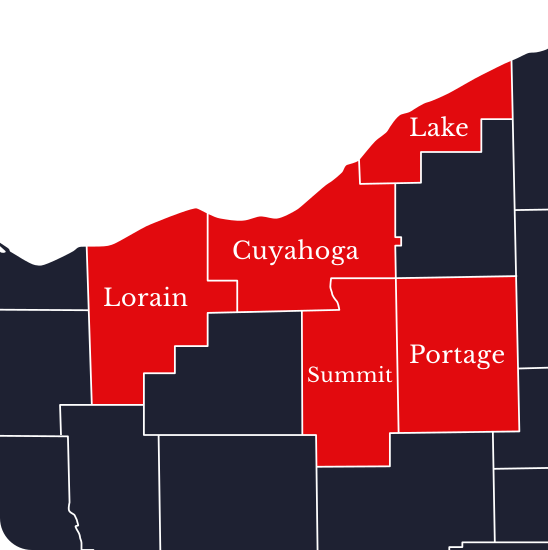
How We Defend Unlawful Sexual Conduct with a Minor Cases in Cuyahoga County
These cases often turn on age, intent, and the reliability of how the accusation surfaced. We build a defense around:
- Challenging knowledge and recklessness: If the evidence shows a reasonable, good-faith belief about the other person's age, we use it to attack the state's burden of proof.
- Investigating the accuser's account and motive: These allegations often arise during custody disputes, breakups, or family conflict. We look for inconsistencies and reasons someone had to make the claim.
- Reviewing digital evidence independently: Text messages, social media, and location data are often incomplete or taken out of context. We conduct our own forensic review rather than accepting the state's version.
- Scrutinizing forensic interviews: Interviews with a minor must follow strict protocols. Leading questions or repeated interviews can distort a child's account.
- Attacking constitutional violations: Illegal searches, coerced statements, and Miranda violations can result in suppressed evidence.
- Negotiating when it serves your interests: In the right case, resolving the charge at a lower degree may be a better outcome than a trial. We walk you through every option honestly.
What to Do If You're Under Investigation
If police or a Children's Services investigator has contacted you, don't explain yourself or try to clear things up on your own. Anything you say can be used against you, and early statements are difficult to walk back later.
Preserve your phone, messages, and any records that may be relevant, and contact a defense attorney before you speak with anyone else. The earlier your defense starts, the more control you have over how the case develops.
#cta_start
Get the Representation You Need
We’ll challenge the charges you’re facing and vigorously defend your rights. Protect your future by reaching out to our team as soon as possible.
#cta_end







.avif)